Trash-can and property attractant solutions
Raccoons in Trash
Practical help for repeated raccoon activity around trash cans, dumpsters, pet food, bird feeders, compost, fallen fruit and other food sources near homes and businesses.
Licensed and insured • Residential and commercial service • Serving Virginia since 2008
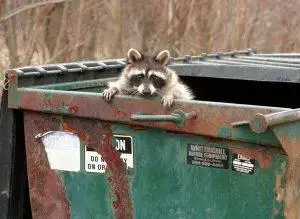
Repeated nighttime feeding around homes and businesses
Why Raccoons Keep Getting Into Trash
Raccoons are persistent when a property offers an easy food source. An unsecured trash can, dumpster, pet-food bowl, bird feeder, compost pile or fallen fruit can bring the same animal back night after night.
Scattered garbage is often the most visible problem, but repeated feeding can also lead to tracks, droppings, damaged lids, torn bags and raccoons sheltering beneath decks, sheds or other nearby structures.
The first step is identifying every reliable food source. If raccoons are also denning in a structure or repeatedly remaining on the property, professional removal may be appropriate in addition to attractant control.
Clues that raccoons are feeding on the property
Signs Raccoons Are Getting Into Trash
Tipped cans and torn garbage bags
Raccoons may pull bags through gaps, lift loose lids or overturn lightweight containers to reach food waste.
Tracks and repeated nighttime visits
Hand-like tracks, camera footage or activity occurring at a similar time each night can confirm a recurring route.
Droppings near feeding areas
Waste may appear near cans, decks, sheds, wood lines or travel routes. Avoid direct contact and keep pets away.
Activity spreading beyond the trash cans
Raccoons attracted by food may begin using a porch, crawl space, attic, chimney, shed or other protected area nearby.
Food sources can support a larger recurring problem
Why Yard and Property Conditions Matter
The retiring raccoons-in-yards page is being consolidated here because trash activity rarely exists in isolation. Bird seed, pet food, compost, grills, fallen fruit and accessible garden produce can all reinforce the same nighttime feeding pattern.
A raccoon visiting the yard does not always require trapping. However, repeated bold activity, structural denning, property damage or an animal that will not leave may justify a professional evaluation.
Do not feed or corner the raccoon
Do not intentionally feed raccoons, approach them for photographs or block their escape route. Keep children and pets away from the active area.
Remove food access first, then evaluate whether a denning or removal problem remains.
Attractant control before repeated trapping
How a Recurring Trash Problem Is Evaluated
- Identify every food source. Trash, dumpsters, pet food, bird seed, compost, grills and fallen fruit should all be considered.
- Confirm the activity pattern. Tracks, camera footage, timing and travel routes help show whether the same area is used repeatedly.
- Check for nearby shelter. Decks, sheds, crawl spaces, attics, chimneys and wood lines may provide den sites close to the food source.
- Secure the attractants. Containers and feeding practices should be corrected so new raccoons are not continually rewarded.
- Determine whether removal is needed. Structural entry, damage, persistent occupancy or an animal that remains on site may require professional service.
Food Sources That Commonly Attract Raccoons
- Loose trash-can lids and exposed bags
- Commercial or residential dumpsters
- Pet food and outdoor water bowls
- Bird feeders and spilled seed
- Compost containing food scraps
- Grill grease, fallen fruit and garden produce
Trash security must be practical
A lid that looks closed may still be easy for a raccoon to lift or pull open. The container must resist tipping, prying and access through gaps.
Commercial dumpster doors and drain plugs should also be checked.
Reduce access without creating new risks
How to Reduce Raccoon Activity Around Trash
Consistent food control is more effective than temporary lights, noise or odor products. Every person using the containers must follow the same routine or the raccoon will continue to find an opportunity.
- Use rigid cans with tight, locking or secured lids
- Store trash inside a garage or secure enclosure when practical
- Place containers out as close to pickup time as allowed
- Clean food residue from cans, grills and dumpster areas
- Bring pet food indoors and clean spilled bird seed
- Collect fallen fruit and manage accessible compost
- Inspect nearby decks, sheds and structures for denning activity
Related raccoon service information
Raccoon Removal and Identification Links
Questions about raccoons getting into trash
Raccoons in Trash FAQ
Why do raccoons keep returning to my trash cans?
They may use damaged vents, weak soffits, fascia gaps, roof intersections, uncapped chimneys or openings near additions and attached garages.
Will lights, ammonia or noise keep raccoons away?
No. Young raccoons may still be inside, and the adult may return. The active situation should be evaluated before permanent closure.
Can bird feeders and pet food attract raccoons?
Repellents, lights and noise do not reliably solve a structural raccoon problem. The animal, possible young and entry points must be addressed.
Could trash activity lead to a raccoon entering my house?
Include the full property address, when the sounds occur, where they are loudest, any sightings, odor, and safe photographs of exterior roof or soffit damage.
Request service
Request help with a recurring raccoon problem
Please complete our contact form below:
Include the property address, where food is being accessed, how often the raccoon returns, whether it is entering a structure and any safe photographs or camera footage. For an immediate conversation during normal business hours, call (804) 457-2883.
Virginia Professional Wildlife Removal Services, LLC • (804) 457-2883 • vawildlifepro@gmail.com