
Basement raccoon removal and safe indoor response
Raccoons in Basements
Professional help when a raccoon enters a finished or unfinished basement through a door, window well, attached garage, foundation opening or connected crawl space.
Licensed and insured • Residential and commercial service • Serving Virginia since 2008
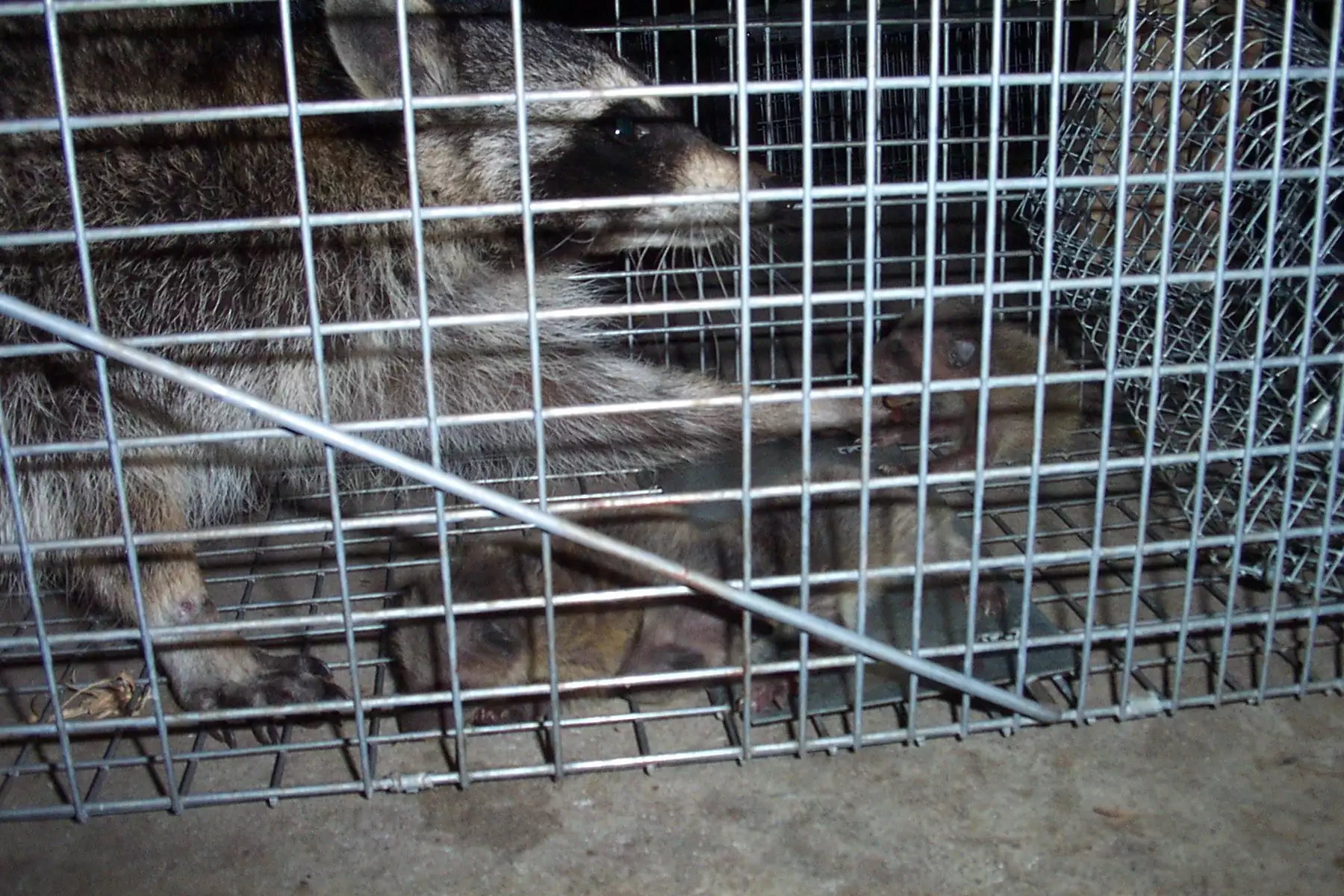
An animal inside an occupied part of the building
When a Raccoon Gets Into a Basement
A raccoon in a basement is different from one living beneath a house. The animal may already be inside an occupied or regularly used part of the building, creating an urgent need to limit contact and identify how it entered.
Common routes include an open exterior door, a damaged basement window, a window well, an attached garage, a foundation opening or a connected crawl space. A raccoon may also move downstairs from another part of the structure.
Do not corner, chase or attempt to handle the animal. Keep people and pets away, close interior doors when it can be done safely and request professional assistance.
Clues that a raccoon is inside the basement
Signs of a Raccoon in a Basement
Direct sighting or heavy movement
A raccoon may be seen near stairs, storage areas, utility rooms, window wells or the basement perimeter. Heavy movement is often most noticeable after dark.
Disturbed storage or building materials
Boxes, insulation, stored items, screens or flexible ductwork may be displaced as the animal searches for shelter or an exit.
Droppings, urine or odor
Waste or a strong animal odor may appear near walls, utility areas, floor drains, window wells or concealed corners.
Evidence near a door or window
Tracks, dirt, damaged screening or displaced materials may help identify the route used to enter the basement.
Do not assume there is only one animal
Mothers and Young in Basement Areas
A female raccoon may move young into a quiet basement, utility room, storage area or connected crawl space. Young may remain hidden even when the adult is visible.
Before an opening is permanently closed, the area should be evaluated for dependent young and for any connection to another part of the structure.
Do not block the exit route first
Closing a door, window opening or foundation gap without knowing where the animal and any young are located can trap them inside.
The correct sequence is control the immediate area, inspect, remove, confirm, exclude and repair.
Safety first, then removal and exclusion
How Basement Raccoon Removal Is Evaluated
- Confirm the animal’s location. Sightings, sounds, tracks, waste and disturbed materials help define the active area.
- Limit access to occupied rooms. People and pets should remain away while safe interior separation is maintained.
- Check for young or connected spaces. Utility rooms, storage areas, crawl-space connections and wall openings may conceal additional animals.
- Remove the raccoon. The method depends on the animal’s location, available exits and the condition of the basement.
- Correct the entry route. Doors, windows, screens, foundation gaps or connected access points can then be repaired or secured.
How Raccoons Enter Basements
- Open exterior basement doors
- Damaged basement windows or screens
- Uncovered or damaged window wells
- Attached garages or interior stairways
- Foundation openings and utility penetrations
- Connected crawl spaces or unfinished additions
A basement animal can move quickly
A raccoon may shift between storage areas, utility rooms, stairways and connected spaces. Sounds may seem to come from a wall or ceiling even when the animal is on the basement floor.
Avoid entering the area repeatedly to search for it.
After the animal is safely removed
Basement Cleanup, Damage and Entry-Point Repair
A raccoon may disturb stored belongings, insulation, ductwork, screens and utility-area materials. Droppings, urine or odor may also require attention after removal.
The most useful service request explains whether the basement is finished or unfinished, where the raccoon was seen, whether an exterior opening is visible and whether people or pets have had contact with the animal.
- Secure confirmed door, window or foundation openings
- Replace damaged screening or covers
- Remove reachable nesting material or waste
- Evaluate accessible insulation or duct damage
- Address odor sources when they can be located and reached
Related raccoon service information
Raccoon Removal and Identification Links
Questions about raccoons inside basements
Raccoons in Basements FAQ
What should I do if a raccoon is in my basement?
They may use damaged vents, weak soffits, fascia gaps, roof intersections, uncapped chimneys or openings near additions and attached garages.
Can a raccoon climb basement stairs?
No. Young raccoons may still be inside, and the adult may return. The active situation should be evaluated before permanent closure.
Can there be baby raccoons in a basement?
Repellents, lights and noise do not reliably solve a structural raccoon problem. The animal, possible young and entry points must be addressed.
Do you repair the entry point after removal?
Include the full property address, when the sounds occur, where they are loudest, any sightings, odor, and safe photographs of exterior roof or soffit damage.
Request service
Request raccoon removal from a basement
Please complete our contact form below:
Include the property address, whether the basement is finished or unfinished, where the raccoon was seen, any visible door, window or foundation opening and whether people or pets had contact. For an immediate conversation during normal business hours, call (804) 457-2883.
Virginia Professional Wildlife Removal Services, LLC • (804) 457-2883 • vawildlifepro@gmail.com