Mother-and-young raccoon removal from structures
Baby Raccoons in Attics, Chimneys and Buildings
Professional help locating and removing mother raccoons and dependent young from attics, chimneys, walls, crawl spaces and other protected den sites.
Licensed and insured • Residential and commercial service • Serving Virginia since 2008
Mothers, dependent young and time-sensitive structural problems
Baby Raccoons Inside Homes and Buildings
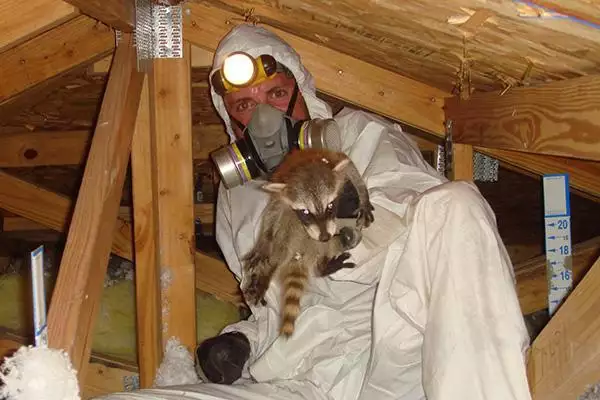
Baby raccoons are often discovered after homeowners hear repeated chirping, chittering, squeaking or movement in an attic, chimney, wall-adjacent space or crawl space. In many cases, a female raccoon has selected the structure as a protected den.
Young raccoons may remain hidden even while the mother leaves to find food. Removing or excluding only the adult can leave dependent babies behind, leading to prolonged noise, odor and additional damage.
The correct response is to identify the den location, account for every young raccoon, remove the family appropriately and then repair the confirmed entry point.
Original VPWRS attic-removal recording
Listen to Baby Raccoon Sounds
This original recording was captured while Virginia Professional Wildlife Removal Services was removing baby raccoons from an attic.
Similar sounds may indicate dependent young, but sound alone cannot confirm the species or exact location.
Also review the Raccoon Sounds page for comparisons with adult raccoons, squirrels, rats, mice and birds.
Clues that dependent young may be present
Signs of Baby Raccoons in a Structure
Chirping, chittering or whining sounds
Young raccoons may vocalize repeatedly when hungry, active or separated from the mother.
Activity concentrated in one den area
Sounds may remain near the same attic corner, chimney smoke shelf, wall junction or crawl-space location.
A female raccoon entering and leaving
Camera footage, tracks or nighttime sightings may show an adult repeatedly using the same roof, chimney or foundation route.
Noise continuing after the adult leaves
Young may remain inside while the mother forages, so temporary quiet or an adult sighting outdoors does not confirm that the den is empty.
Different structures create different removal challenges
Where Baby Raccoons Are Commonly Found
Attics and roof spaces are common because they provide warmth, darkness and protection. Chimneys can resemble hollow trees, with young located above the damper or on the smoke shelf. Crawl spaces, wall-adjacent areas and outbuildings may also be used.
The exact location matters. Opening an attic hatch, fireplace damper or crawl-space door without knowing where the family is positioned can create a close-contact situation.
Do not seal the entry point first
Closing the opening before the mother and all dependent young are confirmed out can trap animals inside or separate the family.
Inspection, removal, confirmation and repair must occur in the correct order.
Account for the entire family before exclusion
How Baby Raccoon Removal Is Evaluated
- Identify the likely den location. Sound, timing, exterior activity, droppings and visible entry damage help narrow the active area.
- Determine whether a mother is present. A female may leave temporarily while dependent young remain inside.
- Locate and account for the young. Babies may be concealed behind insulation, above a damper or in a wall-adjacent void.
- Remove the family appropriately. The method depends on age, location, access and building conditions.
- Confirm the structure is clear before repair. The active entry point and appropriate vulnerable areas can then be secured.
Baby Raccoon Problems by Location
- Attics: nesting in insulation near roof and soffit entries
- Chimneys: young above the damper or on the smoke shelf
- Walls: sounds transferred from nearby attic or roof spaces
- Crawl spaces: concealed dens behind ductwork or insulation
- Sheds and outbuildings: quiet nesting sites with multiple openings
The mother may not be present during inspection
A female commonly leaves to forage and returns later. The absence of the adult at one moment does not mean the babies have been abandoned.
Fresh activity, sound and the den location should be considered together.
When young raccoons create a service emergency
When Baby Raccoons Need Professional Attention
Professional service is appropriate when young raccoons are inside a building, the mother is entering through a damaged area, the family has been separated, or noises continue after an opening has been altered.
- Repeated baby-raccoon sounds in an attic, chimney or wall area
- A female repeatedly entering through a soffit, vent or chimney
- Young visible in a fireplace, basement or occupied room
- An entry point sealed before the family was confirmed out
- Odor, droppings, nesting material or contaminated insulation
- Baby raccoons found without a visible mother
Related mother-and-young service information
Baby Raccoon and Removal Links
Questions about baby raccoons inside structures
Baby Raccoons FAQ
What do baby raccoons sound like?
They may use damaged vents, weak soffits, fascia gaps, roof intersections, uncapped chimneys or openings near additions and attached garages.
Can I seal the entry after the mother leaves?
No. Young raccoons may still be inside, and the adult may return. The active situation should be evaluated before permanent closure.
Should I touch or move baby raccoons?
Repellents, lights and noise do not reliably solve a structural raccoon problem. The animal, possible young and entry points must be addressed.
Can baby raccoons be inside a chimney?
Include the full property address, when the sounds occur, where they are loudest, any sightings, odor, and safe photographs of exterior roof or soffit damage.
Request service
Request service for baby raccoons
Please complete our contact form below:
Include the property address, where the young are heard or seen, when sounds occur, any adult sightings, visible soffit, vent, chimney or foundation damage, and safe photographs or recordings. For an immediate conversation during normal business hours, call (804) 457-2883.
Virginia Professional Wildlife Removal Services, LLC • (804) 457-2883 • vawildlifepro@gmail.com