Professional Canada goose management for commercial, residential and managed properties across Virginia
Goose Control Services in Virginia
Site-specific Canada goose control, deterrence and habitat-management recommendations for qualifying Virginia properties.
Licensed and insured • Locally owned • Serving Virginia since 2008
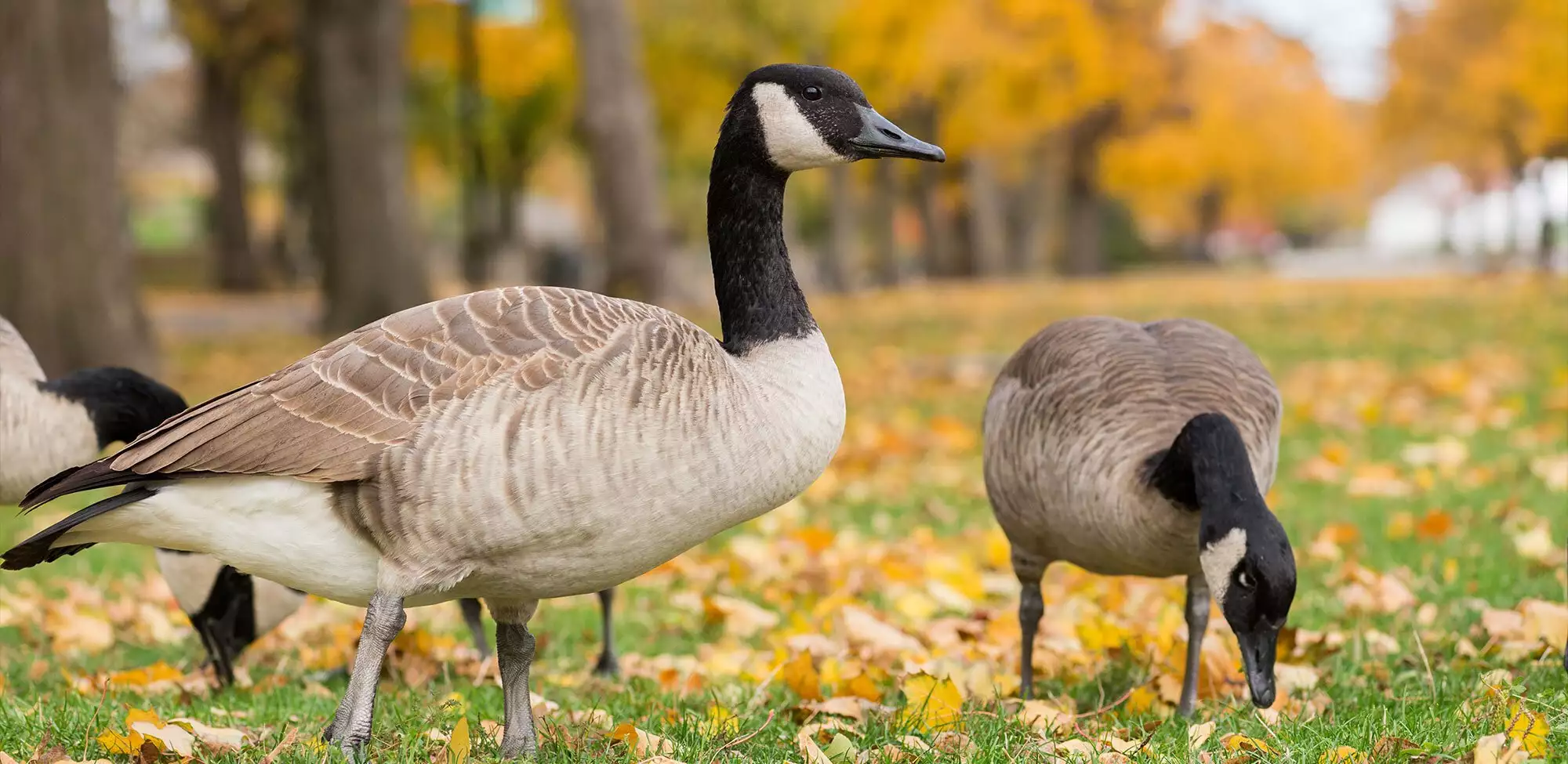
Site-specific Canada goose management for Virginia properties
When Goose Control May Be Needed
Canada geese can create recurring problems on commercial campuses, apartment communities, golf courses, parks, retention ponds, waterfront properties and other managed landscapes.
Common concerns include accumulated droppings on walkways and lawns, aggressive behavior near nests or goslings, turf damage, shoreline erosion, blocked entrances, complaints from residents or visitors and repeated use of ponds or open grass.
Virginia Professional Wildlife Removal Services evaluates the property, goose activity, water access, food sources, public-use areas and management goals before recommending a control plan. A chronic goose problem usually requires coordinated changes rather than a single scare device or one-time visit.
Property assessment
Review water, lawns, nesting areas and goose travel patterns
Habitat management
Reduce the conditions that repeatedly attract geese
Deterrence strategies
Use lawful, site-appropriate methods consistently
Monitoring and prevention
Adjust the program as seasonal activity changes
Effective programs usually combine more than one technique
Goose Management Options
Habitat modification
Changes to shoreline access, mowing practices, feeding activity, landscaping, open-lawn conditions and travel routes between water and grass may make a site less attractive to geese.
Harassment and deterrence
Repeated, properly timed deterrence can interrupt established use patterns when it is lawful, safe and appropriate for the property. Timing, consistency, staff coordination and changing the pressure before geese become accustomed to it are important.
Repellents and exclusion
Approved repellents, shoreline barriers and access-control measures may be useful as part of a broader program, but rarely solve a chronic problem by themselves when food, short grass and easy water access remain unchanged.
Monitoring and prevention
Long-term results depend on consistency, documentation and adjusting the plan as goose behavior and seasonal conditions change.
Goose Activity Assessment
Evaluate the property, water access, nesting areas and use patterns.
Site-Specific Control Plan
Select lawful methods matched to the property and season.
Monitoring and Prevention
Track results and adjust the program when goose activity changes.
Goose control is regulated and site conditions matter
Legal and Seasonal Considerations
Canada geese are protected under federal and state wildlife laws. Certain actions involving active nests, eggs, capture or lethal control may require permits, registration or agency authorization.
The presence of nests, eggs, goslings, water access, neighboring properties, public-use areas and seasonal movement can affect which methods are appropriate and when work can occur.
A responsible plan begins with an on-site assessment and a written objective rather than applying a one-size-fits-all remedy or promising immediate removal. For birds nesting in bathroom, kitchen or dryer vents, see our bird removal and vent-control service.
Helpful details for a goose-control request
- The complete Virginia service address
- Property type and approximate acreage
- Whether a pond, lake, river or retention basin is present
- Estimated number of geese
- Whether nests or goslings are present
- How long the problem has been occurring
- Safe photographs of affected areas
Call: (804) 457-2883
Hours: Mon–Fri 6 a.m.–6 p.m.
Sat–Sun 6 a.m.–noon
Assessment, planning, implementation and monitoring
How Professional Goose Control Works
- Evaluate the property. Review goose activity, water access, food sources, nesting areas and public-use concerns.
- Identify practical control options. The plan may include habitat changes, deterrence, repellents, barriers or other lawful measures.
- Set realistic objectives. Some properties require ongoing reduction and prevention rather than a one-time visit.
- Implement the approved plan. Methods are selected according to season, property conditions and legal requirements.
- Monitor and adjust. Goose behavior can change, so successful programs may require follow-up and modification.
Why quick fixes often fail
Do Goose Repellents and Scare Devices Work?
Repellents, decoys, noise makers and visual scare devices may provide temporary relief, especially before geese establish a strong pattern of use.
Results are usually limited when the site still provides open water, short grass, intentional feeding, easy shoreline access and a clear escape route back to water. Geese may also become accustomed to stationary devices that never move or change.
The strongest programs combine appropriate deterrence with habitat changes, documentation and consistent follow-through. No single product can guarantee that geese will never return.
Signs professional goose management may be needed
- Large amounts of droppings on walkways or lawns
- Repeated goose use around ponds or entrances
- Aggressive behavior during nesting season
- Complaints from residents, tenants, customers or visitors
- Turf damage and bare shoreline areas
- Previous deterrents have stopped working
Do not disturb active nests or eggs without first confirming the applicable legal requirements.
Quick answers
Questions about goose control in Virginia
Goose Control FAQ
Why do Canada geese keep returning to the same property?
Geese are attracted to open water, short grass, easy shoreline access, intentional or accidental food sources and locations where they can see threats and quickly return to water. Once a flock establishes a routine, it may return unless those conditions and the behavior pattern are addressed.
Do goose repellents work?
Repellents may help reduce feeding on treated turf, but results depend on correct application, weather, mowing, regrowth and whether other attractive conditions remain. They are usually most effective as one part of a broader management program.
Do fake coyotes or predator decoys work?
They may create short-term movement, but geese often become accustomed to stationary devices that are not moved, changed or reinforced with other lawful deterrence. A single decoy should not be expected to solve an established property-wide problem.
Can active goose nests or eggs be removed?
Canada geese are protected. Actions involving active nests or eggs may require permits, registration or agency authorization. Do not disturb a nest or eggs until the applicable requirements and available options have been confirmed.
Can goose control be completed in one visit?
Some new or limited problems may improve quickly, but established sites often require repeated visits, staff participation, habitat changes and ongoing monitoring. The realistic objective may be reducing goose use and property impacts rather than guaranteeing permanent absence.
Do you provide goose control for commercial properties?
Yes. Service may be available for commercial campuses, apartment communities, golf courses, managed landscapes and similar properties.
What information should I provide when requesting service?
Provide the address, property type, estimated number of geese, water features, nesting activity, duration of the problem and photographs when possible.
How much does goose control cost?
Cost depends on property size, number of geese, water access, nesting conditions, selected methods and the amount of follow-up required.
Tell Us About the Goose Activity, Water Features and Property Concerns
Please complete our contact form below:
Include the Virginia service address, property type, approximate number of geese, presence of ponds or other water, whether nests or goslings are present and safe photographs when available. For an immediate conversation during normal business hours, call (804) 457-2883.
Virginia Professional Wildlife Removal Services, LLC • (804) 457-2883 • vawildlifepro@gmail.com