Structural raccoon removal and exclusion
Raccoons in Attics, Roofs, Soffits and Walls
Professional inspection and removal for heavy nighttime activity, damaged roof areas, attic nesting, wall noise and raccoon entry through soffits, fascia, vents and roof intersections.
Licensed and insured • Residential and commercial service • Serving Virginia since 2008
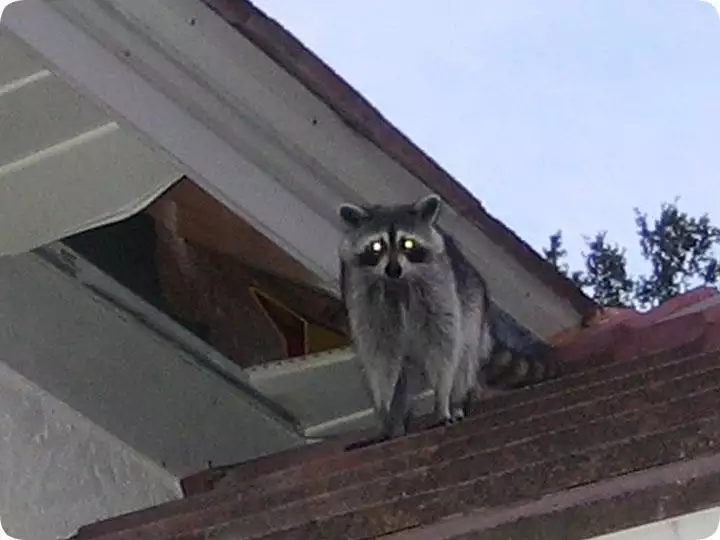
Heavy movement, roof damage and concealed den sites
When a Raccoon Gets Into a Building
Raccoons are strong, capable climbers that can use damaged or vulnerable areas along a roof, soffit, fascia, vent or chimney. Once inside, they may move through an attic, ceiling area or wall cavity, making the exact location difficult to judge from sound alone.
Calls involving raccoons in attics, roofs, soffits, walls and occupied houses often describe heavy walking, thumping, scraping or rolling sounds after dark. Other signs include displaced soffit, bent vents, torn shingles, damaged fascia, droppings, odor or disturbed insulation.
These situations require more than closing a visible hole. The animal’s location, possible young, secondary openings and safe access all affect the removal and repair plan.
Clues that point to a larger attic animal
Signs of Raccoons in Attics and Roof Areas
Heavy nighttime movement
Raccoons can sound like a person walking, shifting or rolling something above a ceiling. Activity is often strongest after dark.
Visible roofline damage
Look for bent vents, pulled soffit, damaged fascia, displaced roofing or enlarged gaps where different roof sections meet.
Odor, waste or contaminated insulation
Droppings, urine, nesting material or a dead animal may create odor, staining and insulation problems in an attic or wall area.
Repeated activity at one exterior point
A raccoon may climb the same corner, downspout, tree route or roof edge repeatedly. Safe exterior observations can help identify the active entry area.
A critical part of the inspection
Mothers and Young Raccoons
A female raccoon may use an attic, soffit, chimney or wall-adjacent space as a den. Young raccoons can remain concealed even when the adult is seen outside.
Sealing the entry too early can trap the adult inside, separate a mother from dependent young or cause the raccoon to tear into another part of the building. The removal plan must account for the season, the sounds being reported and the possibility of young.
Do not close the opening first
A visible opening should not be permanently sealed until the active raccoon situation has been evaluated and the animals are confirmed out.
The correct sequence is inspection, removal, confirmation, exclusion and repair.
Inspection before exclusion
How Structural Raccoon Removal Is Evaluated
- Review the reported activity. Timing, sound, sightings, odor and visible damage help narrow the likely location.
- Inspect accessible exterior and interior areas. Roof edges, vents, soffits, fascia, chimney areas, attic access and wall-adjacent spaces are reviewed where safe.
- Check for dependent young. The plan must account for hidden kits before an opening is closed.
- Remove the raccoons. The method depends on location, access, building conditions and what the inspection confirms.
- Complete exclusion and repair. Confirmed entry points and appropriate vulnerable areas can then be addressed.
Where Raccoons Enter and Travel
- Damaged soffits and fascia
- Roof returns and intersections
- Attic and gable vents
- Uncapped or damaged chimneys
- Openings above additions and attached garages
- Wall cavities connected to attic or roof spaces
Why the sound can be misleading
A raccoon moving in an attic can sound as though it is inside a wall or directly above one room. Framing, ducts and connected roof spaces can carry noise well beyond the animal’s actual location.
Inspection should determine the active area before any ceiling, wall or roof repair is planned.
After the animals are confirmed out
Damage, Exclusion, Cleanup and Repair
Raccoons may damage soffits, fascia, vents, shingles, ductwork, insulation and other accessible building materials. Waste and nesting material may also require cleanup.
The work recommended after removal depends on the confirmed entry point, the accessible damage and the condition of the affected area. A qualified-service request should identify whether you see exterior damage, smell odor, hear activity above a particular room or know that the raccoon is using a chimney, attic or roof opening.
- Repair confirmed roof, soffit, fascia or vent openings
- Discuss nearby vulnerable areas when appropriate
- Remove reachable nesting material or waste
- Evaluate accessible insulation or duct damage
- Address odor sources when they can be located and reached
Related raccoon service information
Raccoon Removal and Identification Links
Questions about structural raccoon problems
Raccoons in Attics, Roofs, Soffits and Walls FAQ
What do raccoons in an attic sound like?
They may use damaged vents, weak soffits, fascia gaps, roof intersections, uncapped chimneys or openings near additions and attached garages.
Can a raccoon move from an attic into a wall?
No. Young raccoons may still be inside, and the adult may return. The active situation should be evaluated before permanent closure.
Can raccoons damage insulation and ductwork?
Repellents, lights and noise do not reliably solve a structural raccoon problem. The animal, possible young and entry points must be addressed.
Can you repair the raccoon entry point?
Include the full property address, when the sounds occur, where they are loudest, any sightings, odor, and safe photographs of exterior roof or soffit damage.
Request service
Request raccoon removal from an attic, roof or wall area
Please complete our contact form below:
Include the property address, when the activity occurs, where it is loudest and any visible roof, soffit, fascia, vent or chimney damage. For an immediate conversation during normal business hours, call (804) 457-2883.
Virginia Professional Wildlife Removal Services, LLC • (804) 457-2883 • vawildlifepro@gmail.com