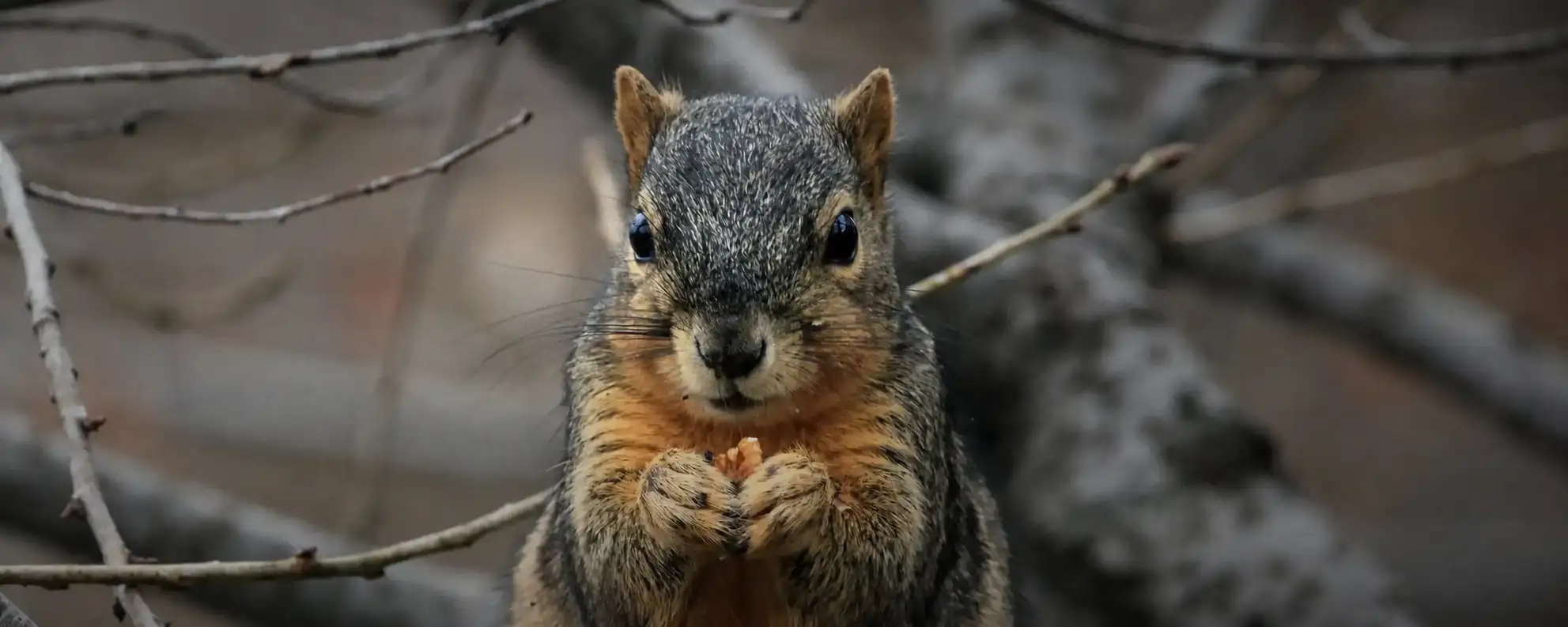
Professional trapping as part of a complete squirrel-removal plan
Professional Squirrel Trapping and Removal
Professional squirrel trapping, removal, exclusion and repair planning for Virginia homes and buildings.
Licensed and insured • Locally owned • Serving Virginia since 2008
Trapping is one tool—not the entire solution
When Is Squirrel Trapping Appropriate?
Professional trapping may be part of a squirrel-removal plan when animals are using an attic, wall-adjacent space, crawl space, garage, shed or other structure. The correct method depends on the species, entry location, season, building access and whether dependent young are present.
Trapping alone does not repair the opening that allowed squirrels inside. It also may not address young, additional animals, multiple entry points, nesting material, droppings or structural damage.
A complete service plan should identify the animal, remove it using an appropriate method, confirm the structure is clear and then address the active opening and related vulnerabilities.
Species identification
Gray squirrels and flying squirrels may require different methods
Den location
Attics, walls, vents and lower spaces affect equipment and access
Young and season
Dependent young can change the trapping or removal sequence
Exclusion and repair
Entry-point correction is needed after the structure is clear
The method should fit the animal and building
What Determines the Trapping Plan?
Species and activity pattern
Gray squirrels are generally active during daylight, while flying squirrels are nocturnal and may live in groups. Correct identification helps determine placement, timing and follow-up.
Entry point and travel route
Traps or removal equipment must be positioned with regard to the active opening and the route squirrels actually use.
Access and safety
Roof height, steep slopes, attic access, wall cavities and occupied areas can affect which methods are practical and safe.
Young and nesting
Dependent young may remain concealed while an adult is outside. The service plan must avoid separating or trapping animals inside.
Active Entry Point
The trapping or removal plan should be based on the opening and travel route squirrels actually use.
Species and Timing
Daytime or nighttime activity helps distinguish gray squirrels, flying squirrels and other wildlife.
Exclusion After Removal
The opening should be secured only after the animal situation and possible young are resolved.
Do not trap the adult without considering the den
Young Squirrels May Be Left Behind
Female squirrels may use attics, soffits, wall cavities and other protected spaces as maternity dens. Young can remain hidden while the adult leaves to forage.
Removing or trapping the adult without evaluating the den can leave dependent young behind, create odor or cause the adult to damage another area while attempting to return.
The season, sound location, nesting evidence and adult travel route should be considered before the trapping plan is finalized.
Helpful details for a squirrel-trapping request
- The complete Virginia service address
- Where squirrels are seen entering or exiting
- Whether sounds occur during the day, at night or both
- Any visible soffit, fascia, vent or roof damage
- Whether young may be present
- Safe photographs of the structure and entry area
Call: (804) 457-2883
Hours: Mon–Fri 6 a.m.–6 p.m.
Sat–Sun 6 a.m.–noon
Inspection, trapping and exclusion planning
How Professional Squirrel Trapping Is Evaluated
- Confirm the animal and activity. Timing, exterior sightings, sounds, droppings and damage help identify the species.
- Locate the active entry point. Soffits, fascia, vents, roof edges, chimneys and building transitions are evaluated where safely accessible.
- Check for young and connected spaces. The attic, walls, soffits or other cavities may contain animals not visible from outside.
- Select the appropriate removal method. Trapping, direct removal, one-way devices or another method may be used depending on the conditions.
- Confirm the structure is clear before exclusion. The opening and appropriate related vulnerabilities can then be secured.
The permanent correction follows removal
Exclusion, Repairs and Cleanup After Trapping
Once squirrels are removed and the structure is confirmed clear, the active opening and appropriate related vulnerabilities can be addressed.
Available work may include repairing wildlife-related soffit, fascia or vent damage, securing construction gaps and removing accessible nesting material or droppings when conditions warrant it.
Electrical, roofing, plumbing or major structural work may require the appropriate licensed trade and may not be included in wildlife-removal service.
What professional trapping should include
- Species and activity identification
- Entry-point and travel-route evaluation
- Consideration of dependent young
- Appropriate trap or removal placement
- Monitoring and follow-up planning
- Exclusion after the structure is clear
A trapping plan should address the complete building problem rather than only the animal caught.
Related squirrel-removal information
Squirrel Trapping and Service Links
- Virginia squirrel removal
- Flying squirrel removal
- Squirrels in attics
- Squirrels in walls
- Squirrel removal cost
- Squirrel damage and repairs
- Squirrel droppings and cleanup
- All wildlife-removal services
Safe photographs of the entry point, roofline and visible damage can help determine whether trapping, direct removal or another method may be appropriate.
Quick answers
Questions about professional squirrel trapping
Squirrel Trapping FAQ
Do you trap squirrels in attics and buildings?
Professional trapping may be used when appropriate, but the method depends on species, access, entry location, season and whether young are present.
Is trapping always the best way to remove squirrels?
No. Direct removal, one-way devices or another method may be more appropriate in some situations. Inspection determines the plan.
Can I trap a squirrel and seal the hole myself?
Sealing too soon can trap other squirrels or young inside. Trapping also does not identify or repair every entry point.
What happens if baby squirrels are inside?
The removal sequence must account for dependent young so they are not left behind or separated from the mother.
Where are squirrel traps placed?
Professional placement is based on the active travel route, entry point, species, building access and safety conditions.
Does trapping include repairs?
Removal, exclusion, repairs and cleanup should be defined in the agreed scope. Trapping alone does not permanently correct the opening.
Do you trap flying squirrels?
Flying-squirrel service may involve trapping or another removal method, along with identification of multiple narrow entry gaps and colony activity.
How much does professional squirrel trapping cost?
Cost depends on species, access, number of animals, young, trap or removal method, monitoring, entry points, repairs and cleanup.
Request Professional Squirrel Trapping Service
Please complete our contact form below:
Include the Virginia service address, where squirrels are seen entering, when sounds occur, any visible damage, whether young may be present and safe photographs when available. For an immediate conversation during normal business hours, call (804) 457-2883.
Virginia Professional Wildlife Removal Services, LLC • (804) 457-2883 • vawildlifepro@gmail.com